
Massachusetts Requires Uninsured Motorist Coverage
You don't choose whether to carry uninsured motorist coverage in Massachusetts. The state mandates it on every auto policy, alongside liability and personal injury protection. If you insure two or more vehicles on one policy, every car carries the same UM limits you select—there's no opting out, no per-vehicle variance, and no waiver process.
The confusion arises because most insurance education content treats UM as optional. In 23 states it is. In Massachusetts it isn't. The mandatory structure removes the decision fatigue but introduces a different question: are the state-required minimums enough to cover your household's vehicles and medical costs when an uninsured driver causes a collision?
Compare car insurance rates in your state
Get quotes from licensed carriers — no obligation, no spam, results in minutes.
Get Your Free QuoteMassachusetts Uninsured Motorists
7.9%
Nearly 1 in 13 drivers on Massachusetts roads carries no insurance, despite the state's compulsory insurance law. When one of them causes a collision, your uninsured motorist coverage is the only layer between you and out-of-pocket repair and medical costs.
Insurance Research Council, 2023
What Uninsured Motorist Coverage Pays in Massachusetts
Uninsured motorist bodily injury (UMBI) pays medical expenses, lost wages, and pain-and-suffering damages when an uninsured or hit-and-run driver injures you or your passengers. The coverage mirrors your liability limits: if you carry the state minimum $25,000 per person and $50,000 per accident in liability, your UMBI matches those figures unless you select higher limits.
Uninsured motorist property damage (UMPD) pays for vehicle repair or replacement when an uninsured driver damages your car. UMPD does not replace collision coverage—it applies only when the at-fault driver is uninsured or unidentified. If the other driver carries insurance, their property damage liability pays your repair costs.
The state minimum $25,000 UMBI per person covers less than half the average new-car transaction price in 2025. A serious injury or totaled vehicle quickly exceeds mandatory minimums.
How UM Limits Stack Across Multiple Vehicles

Carriers do not multiply UM limits by the number of vehicles on the policy.
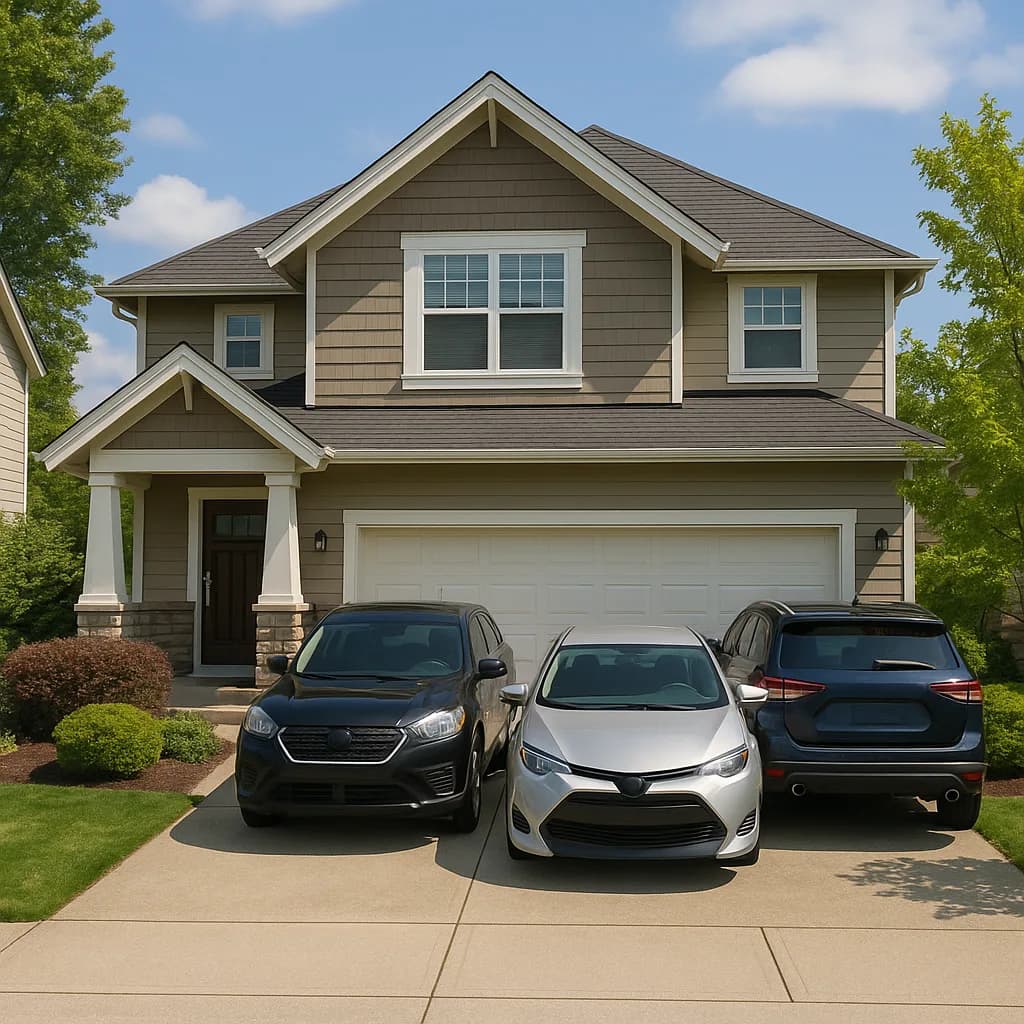
This structure matters when a household owns three or four cars. Adding vehicles increases exposure—more cars on the road, more trips, higher collision probability—but the per-accident UM cap stays flat unless you raise it manually.
Related Articles




When to Raise UM Limits Above the State Minimum
Raise UMBI limits when your liability limits exceed the state minimum. Massachusetts law requires your UMBI limits to match your liability limits unless you reject higher UM coverage in writing.
Raise UMPD limits when your vehicles' combined value exceeds $25,000. The state minimum UMPD cap of $25,000 covers one totaled economy car or moderate damage to two vehicles.
Raise both UMBI and UMPD when you finance or lease multiple vehicles. Lenders require collision and comprehensive coverage but not elevated UM limits. If the vehicle's value exceeds your UMPD cap, you pay the gap out of pocket while still owing the lender the full loan balance. Gap insurance covers the loan-versus-value difference, but it does not eliminate the UMPD shortfall—higher UMPD limits do.
Massachusetts Liability Minimums
$25,000 / $50,000
Your UMBI limits default to match your liability limits unless you select higher coverage or reject the match in writing.
Massachusetts General Laws Chapter 90, Section 34A
Underinsured Motorist Coverage Fills the Gap
Underinsured motorist (UIM) coverage pays when the at-fault driver carries insurance but their liability limits are lower than your damages. Massachusetts does not mandate UIM, but carriers must offer it.
UIM matters more as your own liability and UM limits rise. UIM coverage equal to your liability limits closes that gap. The cost to add UIM is typically a small percentage of your total premium, and it applies across all vehicles on the policy the same way UMBI does.
Compare Carriers Writing Multi-Vehicle Policies in Massachusetts
Twelve carriers write multi-vehicle policies in Massachusetts with varying UM limit options and premium structures. A household insuring three vehicles may see a 15-point rate spread between the lowest and highest quote for identical UM limits.
Request quotes with your target UM limits—not just the state minimums—to compare apples to apples. Carriers price UM coverage as a percentage of liability premium, so a lower base rate with higher UM limits can cost less than a higher base rate with minimum UM. The Massachusetts Division of Insurance requires carriers to file their UM rating factors, but those filings are not published in a consumer-friendly format. The fastest path to accurate comparison is to request bound quotes from three to five carriers writing your vehicle count and coverage profile.