Massachusetts Operates a Hybrid System, Not Pure No-Fault
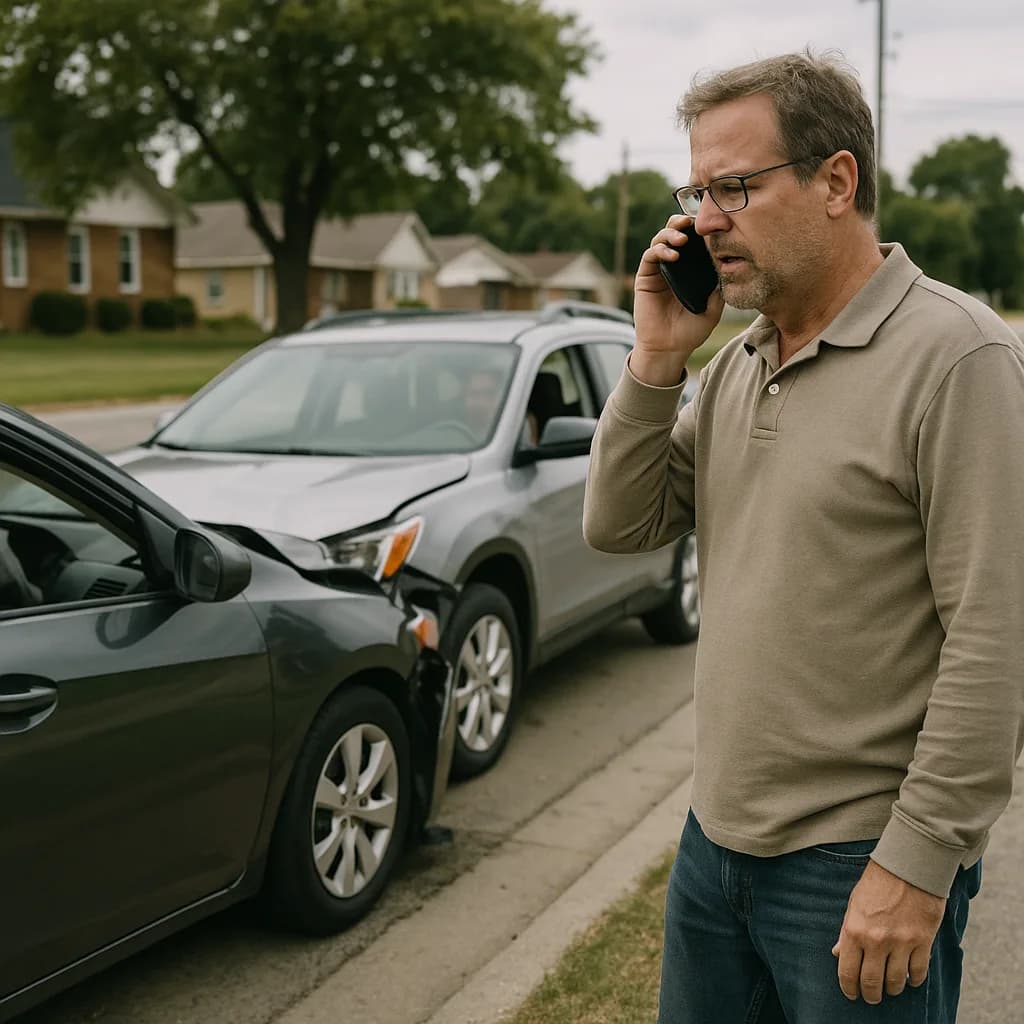
Massachusetts requires Personal Injury Protection coverage on every registered vehicle, which leads many households to assume the state operates under pure no-fault rules. It does not. Massachusetts allows injured parties to file tort lawsuits against at-fault drivers when injuries meet specific thresholds, making it a hybrid or modified no-fault state. When you add a second or third vehicle to your policy, each car must carry its own PIP coverage — one vehicle's PIP does not extend to passengers injured in another household car.
This matters immediately when structuring a multi-car policy. Households combining two existing policies or adding a newly-purchased vehicle often assume PIP works like liability coverage, applying across the entire policy. It does not. Each vehicle on your policy must carry the state-mandated PIP minimum, and each vehicle's PIP coverage applies only to injuries sustained in that specific car.
Compare car insurance rates in your state
Get quotes from licensed carriers — no obligation, no spam, results in minutes.
Get Your Free QuoteMassachusetts PIP Minimum Per Vehicle
Massachusetts General Laws Chapter 90, Section 34A
PIP Covers Medical Expenses and Lost Wages, Regardless of Fault
Personal Injury Protection pays medical expenses, lost wages, and replacement services for anyone injured in your vehicle, regardless of who caused the crash. This includes you, household members, passengers, and pedestrians struck by your car. PIP pays first, before health insurance, and covers up to the policy limit without requiring you to prove the other driver was at fault.
The no-fault label comes from this feature: PIP pays your own injuries without a liability determination.
When you add a vehicle to your policy, that car's PIP coverage applies only to injuries sustained inside that vehicle. A passenger injured while riding in your second car cannot claim against the first car's PIP limit. Each vehicle's PIP operates independently, which is why the per-vehicle mandate exists.
Each vehicle on your Massachusetts policy must carry its own PIP minimum. One car's PIP coverage does not extend to injuries in another household vehicle.
How PIP Applies Across a Multi-Car Policy

Liability coverage on a multi-car policy applies as a single shared limit across all listed vehicles. If your policy carries $50,000 per person in bodily injury liability, that limit applies whether the at-fault crash involves your first car or your third. PIP does not work this way. Each vehicle must carry its own PIP minimum, and each vehicle's PIP limit applies only to injuries sustained in that specific car.
This structure affects how you add vehicles mid-term. When you buy a second car and add it to your existing policy, the carrier re-rates the entire policy and applies the PIP minimum to the new vehicle automatically. You cannot decline PIP on the second car to lower the premium, and you cannot share the first car's PIP limit across both vehicles. Massachusetts law requires every registered vehicle to carry PIP, and the Registry of Motor Vehicles will not process a registration without proof of coverage that includes the PIP minimum.
Related Articles





Tort Liability Remains Available When Injuries Meet the Threshold
Massachusetts preserves the right to sue the at-fault driver for non-economic damages — pain and suffering, emotional distress, loss of consortium — when injuries meet the statutory threshold. This is the key difference between Massachusetts and pure no-fault states like Michigan or Florida, where tort lawsuits are heavily restricted regardless of injury severity. In Massachusetts, PIP pays your immediate medical bills and lost wages, but you retain the right to pursue a liability claim against the at-fault driver if your injuries are serious enough.
Once the threshold is met, you can file a tort claim against the at-fault driver's bodily injury liability coverage for damages PIP does not cover. This dual-recovery structure — PIP pays first, tort liability pays second — is why Massachusetts is classified as a hybrid or modified no-fault state rather than a pure no-fault jurisdiction.
When structuring a multi-car policy, this means your liability coverage must be high enough to defend against tort claims from other drivers whose injuries meet the threshold. The state minimum is $25,000 per person and $50,000 per accident in bodily injury liability, but households with multiple vehicles and significant assets often carry higher limits to protect against lawsuits that exceed the minimum.
Massachusetts Minimum Liability Limits
$25,000 / $50,000 / $30,000
Massachusetts requires $25,000 per person and $50,000 per accident in bodily injury liability, plus $30,000 in property damage liability. These minimums apply to every registered vehicle, and a multi-car policy must meet or exceed them for each listed car.
Massachusetts General Laws Chapter 90, Section 34A
Uninsured Motorist Coverage Is Mandatory and Mirrors Your Liability Limits
Massachusetts also mandates uninsured motorist coverage at the same limits as your bodily injury liability. If you carry $25,000 per person in liability, you must carry $25,000 per person in uninsured motorist. This requirement applies to every vehicle on your policy, and the uninsured motorist limits operate as a shared pool across all listed cars, the same way liability does.
Uninsured motorist coverage pays when you are injured by a driver who carries no insurance or whose liability limits are too low to cover your damages. It also covers hit-and-run crashes where the at-fault driver cannot be identified. When you add a vehicle to your policy, the carrier applies your existing uninsured motorist limits to the new car automatically. You cannot decline uninsured motorist coverage in Massachusetts, and you cannot carry uninsured motorist limits lower than your liability limits.
Compare Carriers That Write Multi-Car Policies in Massachusetts
Twelve carriers write multi-car policies in Massachusetts with varying approaches to PIP pricing, liability limits, and multi-vehicle discounts. Allstate, Geico, Progressive, and State Farm all write standard-tier multi-car policies and offer online quoting. Amica and Hartford write preferred-tier policies with higher underwriting standards but often lower base rates for households with clean records. National General and Bristol West write non-standard policies for households with recent violations or lapses, though their PIP and liability pricing tends to run higher than standard carriers.
When comparing quotes, confirm that each vehicle on the policy carries the mandatory PIP minimum and that your liability and uninsured motorist limits meet or exceed the state minimums. Carriers price PIP differently — some apply a flat per-vehicle charge, others tier PIP pricing by vehicle value or driver age. A quote that looks low on liability but high on PIP may still be competitive when you compare the total premium across all vehicles. Use the comparison tool to request quotes from multiple carriers and compare the total policy cost, not just the per-vehicle breakdown.