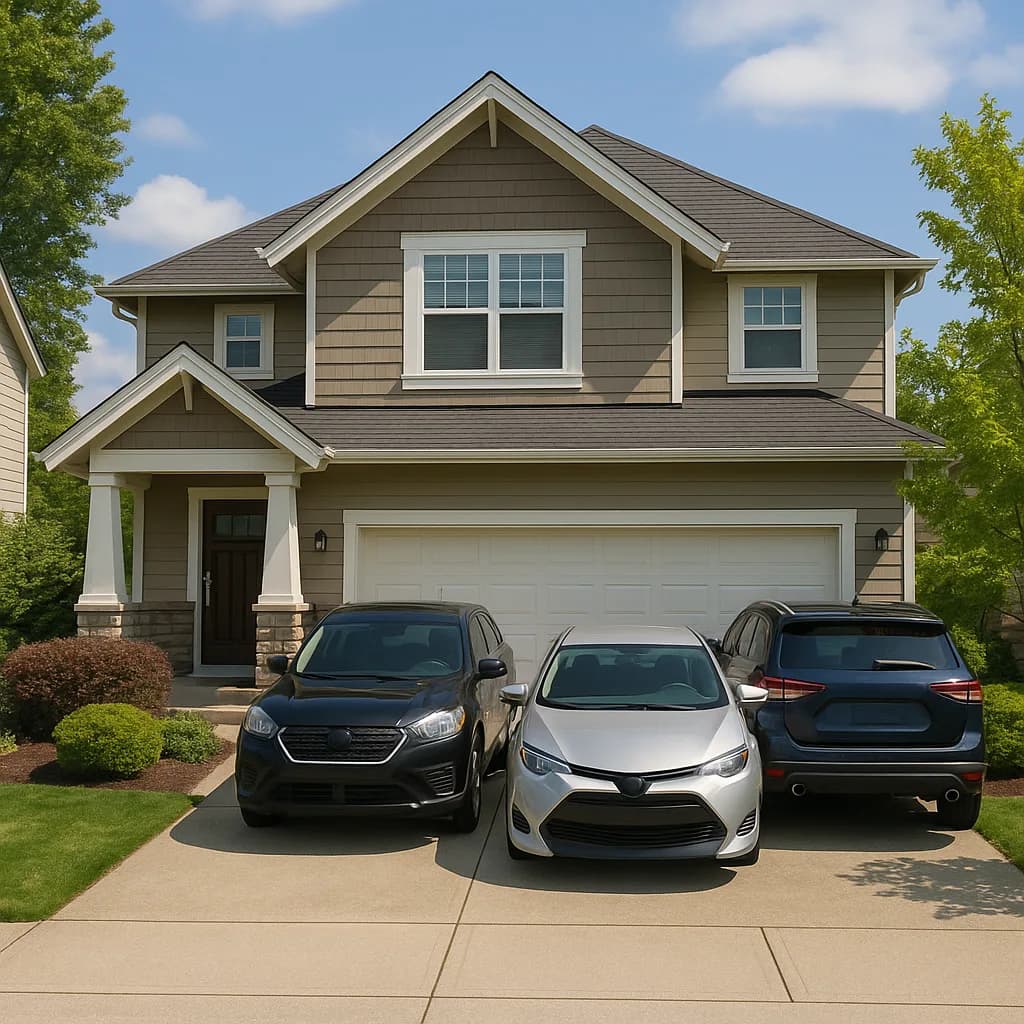
You Just Added a Second Vehicle to Your Policy
You bought a second car, called your carrier, and added it to your existing Massachusetts auto policy. The premium went up more than you expected, and now you're wondering whether you're paying for duplicate coverage or whether the state actually requires you to carry the same minimums on both vehicles.
Massachusetts operates a compulsory insurance system — every registered vehicle must carry state-mandated minimums before the Registry of Motor Vehicles will issue plates. When you add a second car, you're not simply expanding one coverage umbrella. You're triggering a fresh minimum-coverage obligation for that vehicle. The structure is per-vehicle, not per-policy, and that distinction changes how multi-car households structure their coverage.
Compare car insurance rates in your state
Get quotes from licensed carriers — no obligation, no spam, results in minutes.
Get Your Free QuoteMassachusetts Liability Minimums
These minimums apply to each vehicle on your policy, not once across the entire policy.
Massachusetts Registry of Motor Vehicles
What Massachusetts Requires Per Vehicle
These are not policy-level requirements — they attach to each vehicle individually.
When you add a second car, the Registry expects that vehicle to meet the same four mandates before it will process registration. Your carrier structures the policy so each vehicle carries its own minimum-coverage block. You cannot register a second car with only property damage coverage and assume the bodily injury liability from your first car covers both — the system does not work that way.
This per-vehicle structure explains why adding a car raises your premium by more than the cost of insuring the vehicle itself. You are not duplicating coverage; you are meeting a separate minimum-coverage obligation for the new vehicle.
Massachusetts compulsory insurance applies per vehicle, not per policy — adding a second car means meeting state minimums again, not sharing one coverage block across both.
How Multi-Car Policies Structure Coverage

Your declarations page shows each vehicle with its own coverage line: bodily injury liability, property damage liability, personal injury protection, uninsured motorist, and any optional coverages you selected. The state minimums appear for every vehicle because the Registry requires them before issuing plates. Optional coverages — collision, comprehensive, higher liability limits — can vary by vehicle depending on what you chose when you added each car.
The multi-car discount reduces the total premium but does not change the per-vehicle coverage structure. Most carriers writing Massachusetts apply the discount when two or more vehicles sit on the same policy and share a garaging address. The discount lowers your combined cost, but each vehicle still carries its own minimum-coverage block to satisfy the Registry's compulsory insurance rule.
Related Articles






Optional Coverages and How They Apply Across Vehicles
Collision and comprehensive are optional in Massachusetts — the state does not mandate them, and you can drop them on any vehicle you own outright. When you finance or lease a vehicle, the lender requires both until the loan is paid. On a multi-car policy, you can carry collision and comprehensive on one vehicle and drop them on another if that second car is paid off and you're willing to self-insure repair or replacement costs.
Higher liability limits are also optional. You can set different liability limits per vehicle, but most carriers apply the same limits to every car on the policy to simplify rating and avoid gaps at claim time.
Uninsured motorist coverage is mandatory in Massachusetts, but you can buy it at limits matching your bodily injury liability or at the state minimum. Personal injury protection is also mandatory and covers medical expenses for you and your passengers regardless of fault. Neither coverage duplicates across vehicles — each car carries its own PIP and uninsured motorist block to meet the Registry's requirements.
Massachusetts Uninsured Motorist Rate
7.9%
Approximately 7.9% of Massachusetts drivers operate without insurance. Uninsured motorist coverage is mandatory on every registered vehicle and protects you when an at-fault driver has no coverage or insufficient limits to cover your injuries.
Insurance Research Council, 2023
When One Vehicle Needs More Coverage Than Another
A household with a financed sedan and a paid-off older car often carries full coverage on the sedan and liability-only on the older vehicle. Massachusetts allows this — you meet state minimums on both cars, add collision and comprehensive to the financed vehicle, and drop them on the car you own outright. The multi-car discount still applies because both vehicles sit on the same policy.
Some carriers require you to carry the same liability limits across all vehicles on a multi-car policy. Others allow you to set different limits per vehicle. When you add a third or fourth car, ask your carrier whether you can vary collision, comprehensive, and liability limits by vehicle or whether the policy requires uniform coverage across the fleet. Uniform limits simplify claims but can raise costs on older vehicles that do not need high limits or physical damage coverage.
Compare Carriers That Write Multi-Car Policies in Massachusetts
Twelve carriers write multi-car policies in Massachusetts and apply the multi-car discount when you insure two or more vehicles on one policy. Carriers include Allstate, Amica, Bristol West, Farmers, Geico, Hartford, Liberty Mutual, National General, Progressive, State Farm, Travelers, and USAA. Each structures the discount differently — some apply a flat percentage per vehicle after the first, others reduce the base rate across the entire policy.
When you add a second vehicle, request quotes from at least three carriers. Compare the total premium for both vehicles combined, not the per-vehicle cost, because the multi-car discount changes how carriers price the policy. A carrier with a higher base rate but a larger multi-car discount can beat a carrier with a lower base rate and a smaller discount. The only way to know is to compare the final combined premium after the discount applies.