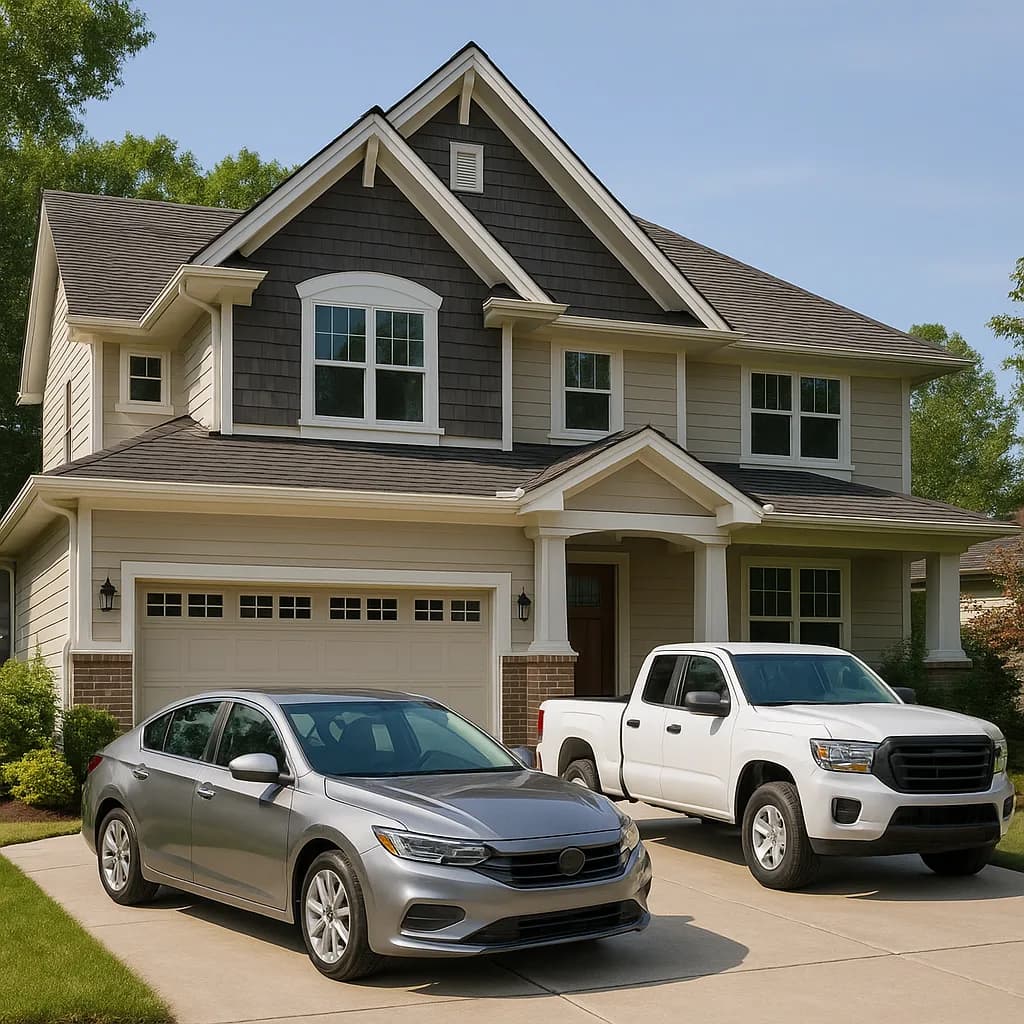
When Adding a Vehicle Changes Your Entire Premium
You just bought a second car, or a household member moved in with their own vehicle, and you're trying to decide whether to add it to your existing Massachusetts auto policy or start a separate one. The question sounds simple, but the answer depends on how carriers structure multi-vehicle policies: adding a car doesn't just tack on a flat amount. It re-rates every vehicle on the policy.
Massachusetts operates a compulsory insurance model. Every registered vehicle must carry at least $25,000 bodily injury per person, $50,000 per accident, and $30,000 property damage, plus Personal Injury Protection and Uninsured Motorist coverage. When you add a vehicle mid-term, the carrier recalculates the entire policy based on the new vehicle count, the drivers assigned to each car, and the garaging address. The multi-car discount applies only when every vehicle sits on the same policy, but the discount percentage varies by carrier and is never published as a standalone figure.
Compare car insurance rates in your state
Get quotes from licensed carriers — no obligation, no spam, results in minutes.
Get Your Free QuoteMassachusetts Minimum Liability
Every registered vehicle in Massachusetts must carry at least $25,000 bodily injury per person, $50,000 per accident, and $30,000 property damage. PIP and Uninsured Motorist coverage are also mandatory.
Massachusetts Registry of Motor Vehicles
Why One Policy Versus Two Policies Matters
The multi-car discount exists to reward households that consolidate all their vehicles onto one policy. Carriers price multi-vehicle policies differently than they price two separate single-vehicle policies because the administrative cost per vehicle drops and the household's total exposure is pooled. But the discount only applies when every vehicle is listed on the same policy declaration page.
If you and a spouse each maintain separate policies, you're paying two policy fees, two sets of administrative charges, and you're not eligible for the multi-car discount on either policy. Combining the policies onto one declaration typically lowers the combined premium, but not always. The outcome depends on each driver's record, the vehicles being insured, and the garaging address.
Massachusetts does not use SR-22 or any certificate filing system. Proof of insurance is verified directly through the Registry of Motor Vehicles when you register a vehicle. If you're combining policies after a move or marriage, the RMV requires proof of coverage for every vehicle at registration, but no separate filing beyond the standard insurance card.
Adding a vehicle mid-term re-rates your entire policy, not just the new car. The multi-car discount applies only when every vehicle sits on the same policy.
How Carriers Structure Multi-Vehicle Policies

When you add a second vehicle, the carrier recalculates the premium for both cars based on the household's total risk profile. The multi-car discount reduces the combined premium, but the base rate for each vehicle may change depending on how drivers are assigned. If the new vehicle is assigned to a driver with a clean record, the first vehicle's rate may stay flat. If the new vehicle is assigned to a driver with points or a recent claim, both vehicles' rates may increase even after the discount is applied.
Carriers require every vehicle on the policy to be garaged at the same address. If a household member keeps their car at a different address, that vehicle typically cannot be added to the same policy, and the multi-car discount does not apply. Roommates who share a residence can sometimes combine vehicles onto one policy if the carrier allows non-related household members, but not all carriers do. Geico, Progressive, and National General write policies for non-related household members in Massachusetts; State Farm and USAA typically require a familial or marital relationship.
Related Articles






When Combining Policies Costs More
Combining two policies onto one does not always lower the total premium. If one driver has a recent at-fault accident or multiple violations, adding their vehicle to a clean driver's policy can raise the clean driver's rate more than the multi-car discount offsets. Carriers rate the entire household, not individual vehicles in isolation.
Massachusetts law allows carriers to use credit-based insurance scores where permitted by regulation. If one spouse has significantly lower credit than the other, combining policies may raise the total premium compared to keeping them separate. The same applies to age: adding a young driver's vehicle to a parent's policy raises the parent's premium even with the multi-car discount, because the young driver is now rated on the entire policy.
If you're comparing whether to combine, request quotes both ways: one quote with all vehicles on a single policy, one quote with vehicles split across separate policies. The difference shows whether the multi-car discount outweighs the rating impact of combining the household's risk profile.
Massachusetts Multi-Vehicle Carriers
12 carriers
Twelve carriers write multi-vehicle policies in Massachusetts, including Geico, Progressive, State Farm, Allstate, Liberty Mutual, USAA, Farmers, Hartford, Amica, Travelers, National General, and Bristol West. Each structures the multi-car discount and household-rating rules differently.
Adding a Vehicle Mid-Term
When you buy a new vehicle or a household member moves in with a car, Massachusetts carriers typically provide a grace period during which the new vehicle is covered under your existing policy without being formally added. The grace period is usually 14 to 30 days, but it varies by carrier. After the grace period expires, the vehicle must be added to the policy or it loses coverage.
Adding a vehicle mid-term triggers a policy re-rating. The carrier recalculates the premium for the entire policy effective the date the vehicle is added, and you'll see an adjustment on your next bill. If the new vehicle is more expensive to insure than your existing cars, the total premium increase may exceed what you expected, even with the multi-car discount applied. If the new vehicle is cheaper to insure, the increase may be smaller than the cost of insuring it on a separate policy.
Compare Carriers for Your Vehicle Count
Not all carriers price multi-vehicle policies the same way. Some apply a larger discount when you add a third or fourth vehicle; others apply the same discount percentage regardless of vehicle count. Geico and Progressive both write policies for households with four or more vehicles in Massachusetts and structure their discounts to reward higher vehicle counts. State Farm and Liberty Mutual also write multi-vehicle policies but structure their household rating differently, often weighing driver assignment more heavily than vehicle count.
Request quotes from at least three carriers that write multi-vehicle policies in Massachusetts. Provide the VIN, garaging address, and driver assignment for every vehicle you're insuring. The quote should reflect the multi-car discount and show the total premium for all vehicles on one policy. Compare that total to the combined cost of separate policies to confirm which structure saves money for your household.